In a YDSE, λ=4000 Å, D=2 m and d=1 mm. Three slabs are available: slab 1 has thickness 2 mm and μ=2; slab 2 has thickness 1 mm and μ=3; slab 3 has thickness 4 mm and μ=3/2. Match the stated slab placements with the
Physics · Wave Optics · Young's Double-Slit Experiment (YDSE)
In a YDSE, λ=4000 Å, D=2 m and d=1 mm. Three slabs are available: slab 1 has thickness 2 mm and μ=2; slab 2 has thickness 1 mm and μ=3; slab 3 has thickness 4 mm and μ=3/2. Match the stated slab placements with the resulting fringe properties.
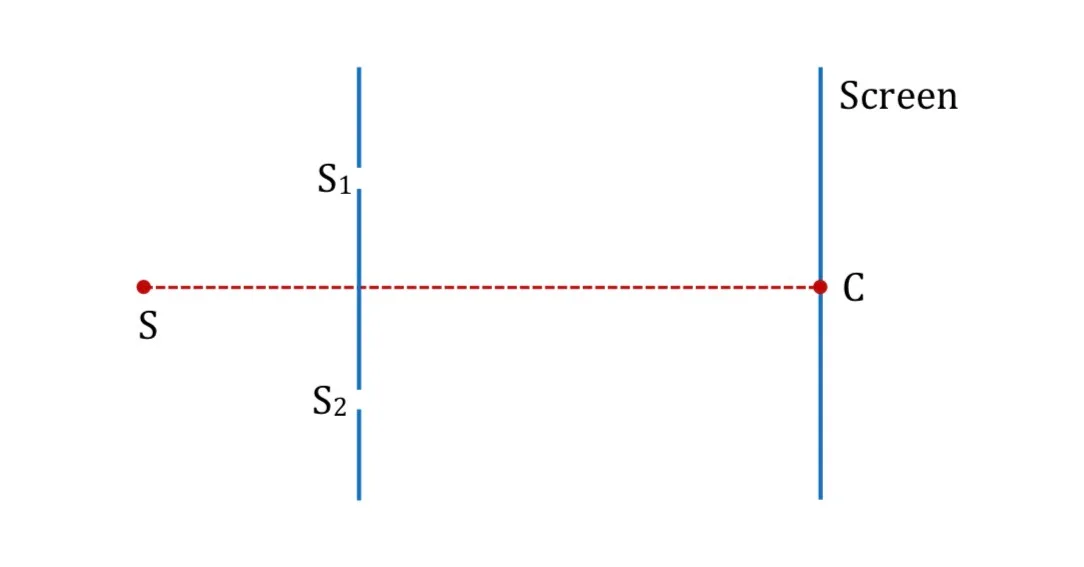
List 1
(A) Slab 1 (2 mm, μ=2) placed before S₁
(B) Slab 2 (1 mm, μ=3) placed before S₂ in addition to A
(C) Slab 3 (4 mm, μ=3/2) placed before slab 1 in addition to B
.
List 2
(P) Central maximum at C
(Q) Central maximum above C
(R) Fringe width = 0.8 mm
(S) Number of fringes crossing centre due to slab placement = 5000
Options
Related questions
- In Young’s double slit experiment we get 60 fringes in the field of view of monochromatic light of wavelength 4000Å. If we use monochromati…
- Unpolarized light in air strikes a material of refractive index 1.73 at Brewster’s angle. Which statement about reflected light and angle o…
- A third ideal polaroid is inserted between two crossed polaroids with its transmission axis at 22.5° to the first. If I₀ is the light inten…
- In interference and diffraction, energy is redistributed: some regions become darker and others brighter. Consider: A. This is consistent w…
- In Young’s double-slit experiment using wavelength λ, the intensity at a point where path difference is λ is K units. What is the intensity…
- Interference pattern can be observed due to superposition of the following waves: (I) y = a sin ωt (II) y = a sin 2ωt (III) y = a sin(ωt -…