Two particles undergo SHM along parallel lines with the same time period T and equal amplitudes. At a particular instant, one particle is at its extreme position while the other is at its mean position. They move in the same direction. They will cross each other after a further time:
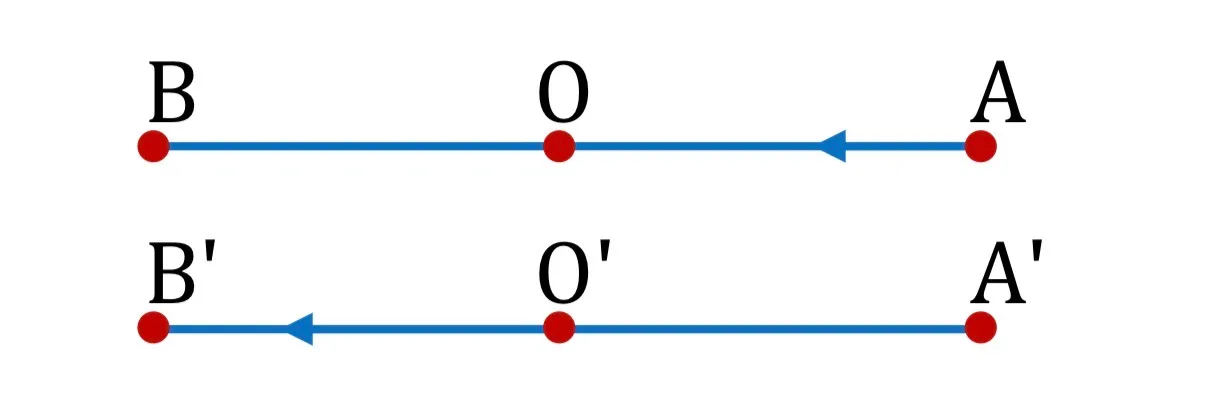
Options
Related questions
- For a particle executing SHM with amplitude a, at what displacement magnitude are its kinetic and potential energies equal?
- What is the potential energy, measured from equilibrium, of a particle of mass m executing SHM with angular frequency ω and amplitude a at…
- A spring–mass oscillator contains sand that leaks gradually from the attached box. Which pair of schematic graphs shows how angular frequen…
- Identical point masses P and Q oscillate vertically on springs of constants k₁ and k₂. If both oscillators have equal maximum speeds, find…
- Savitha, a XI standard student, while conducting an experiment to determine the effective length of a simple pendulum L, notes down the dat…
- A simple pendulum bob of mass 20 g has total mechanical energy (kinetic plus potential) 0.02 J. Find the approximate speed when it passes t…