Free physics question bank
Ghraphical problem of kinematics questions with solutions
Practice Kinematics Part-1 (one dimension) for JEE Main, JEE Advanced, NEET, and Classes 11–12. Attempt each question, then open it for the full solution.
Showing 1–10 of 61 questions
- MCQeasyKinematics Part-1 (one dimension)
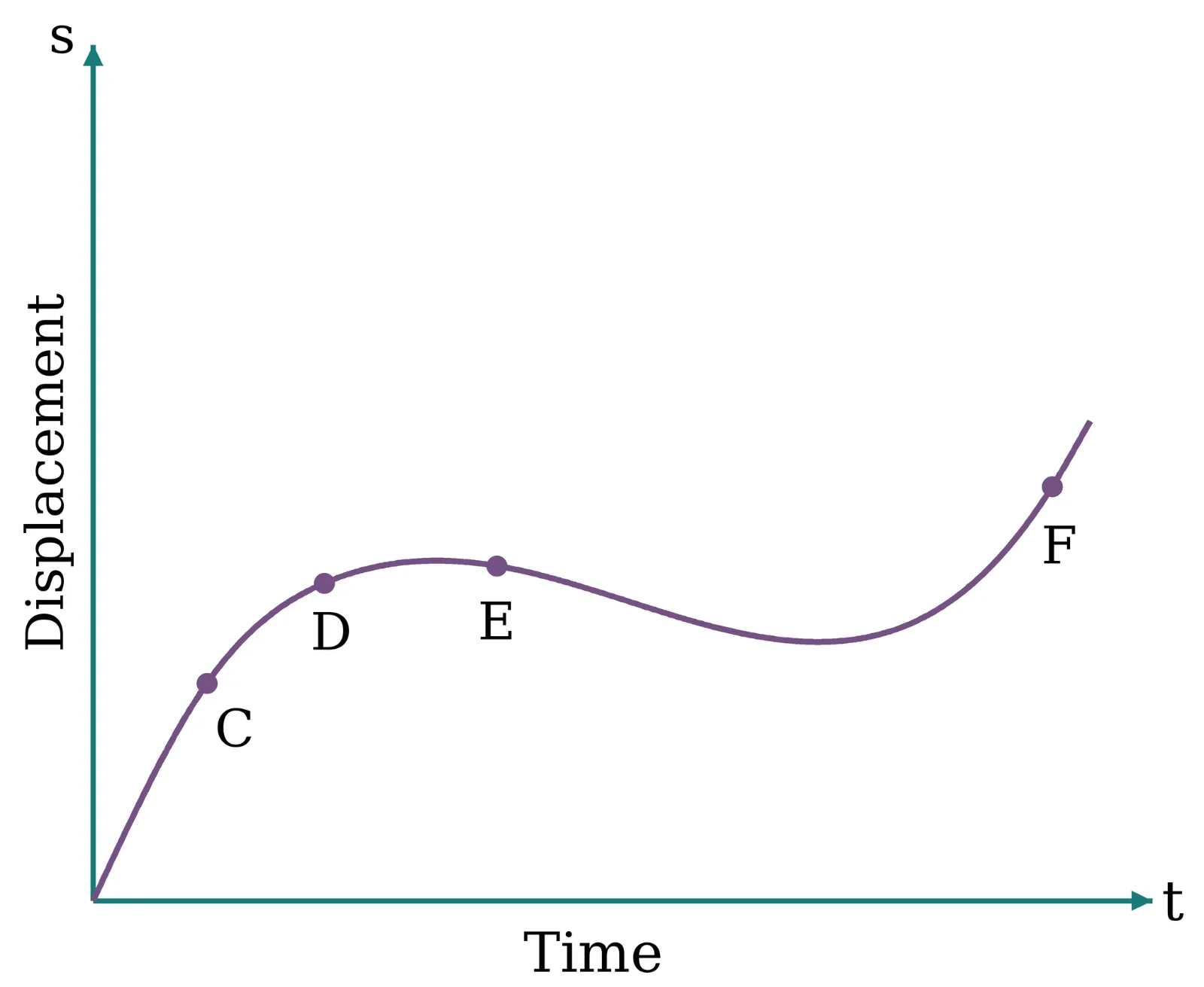
The displacement–time graph of a moving particle is shown. The instantaneous velocity of the particle is negative at the point:
Options
AIPMT 1994NEET
Open question & full solution → - MCQmediumKinematics Part-1 (one dimension)
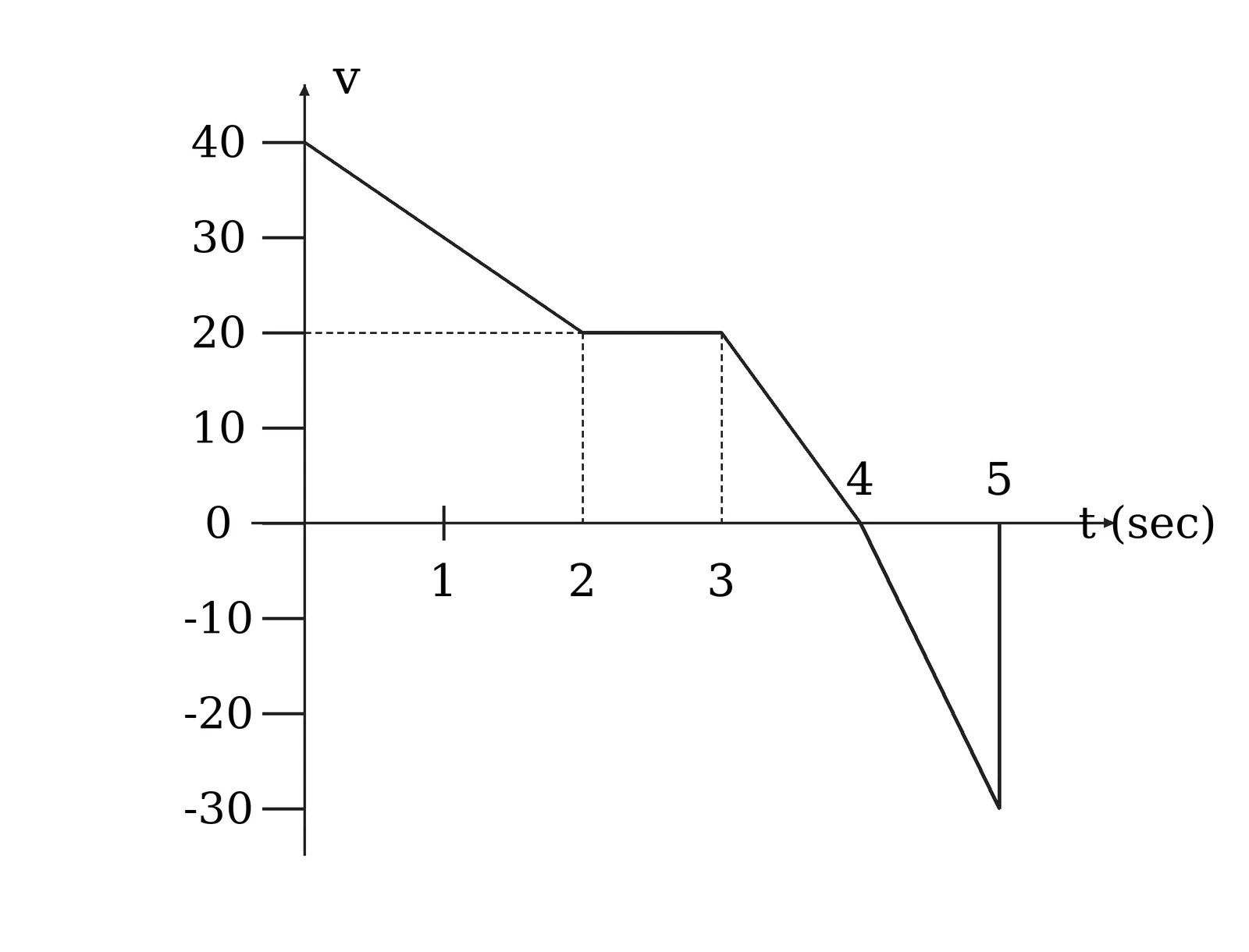
For the velocity-time graph shown, the distance travelled and displacement during the first 5 s, in metres, are respectively:
Options
JEE MainsNEET
Open question & full solution → - MCQdifficultKinematics Part-1 (one dimension)
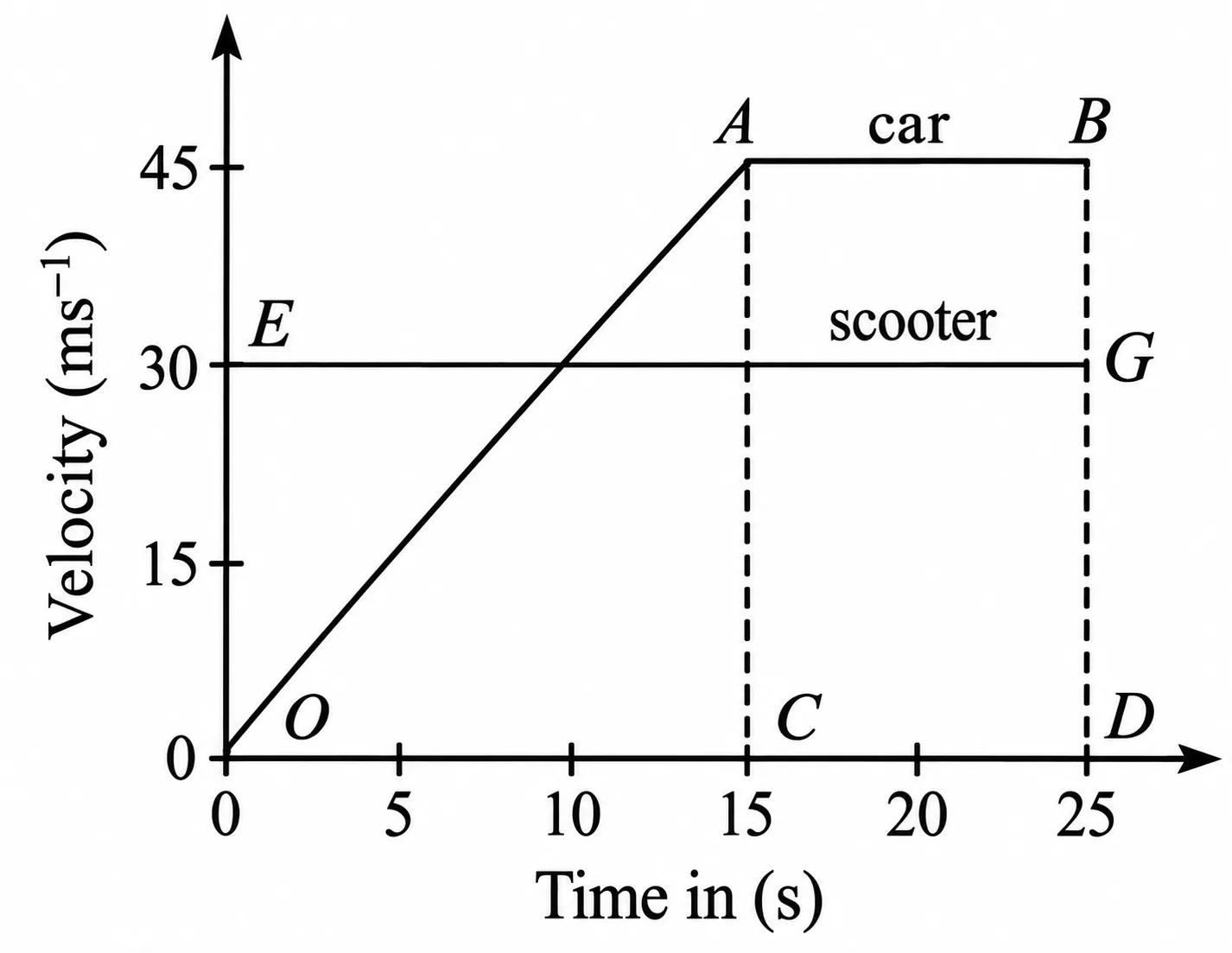
The velocity-time graphs of a car and a scooter are shown. Find (i) the difference between distances travelled in 15 s and (ii) the time at which the car catches the scooter.
Options
JEE MainsJEE Advanced
Open question & full solution → - NumericdifficultKinematics Part-1 (one dimension)
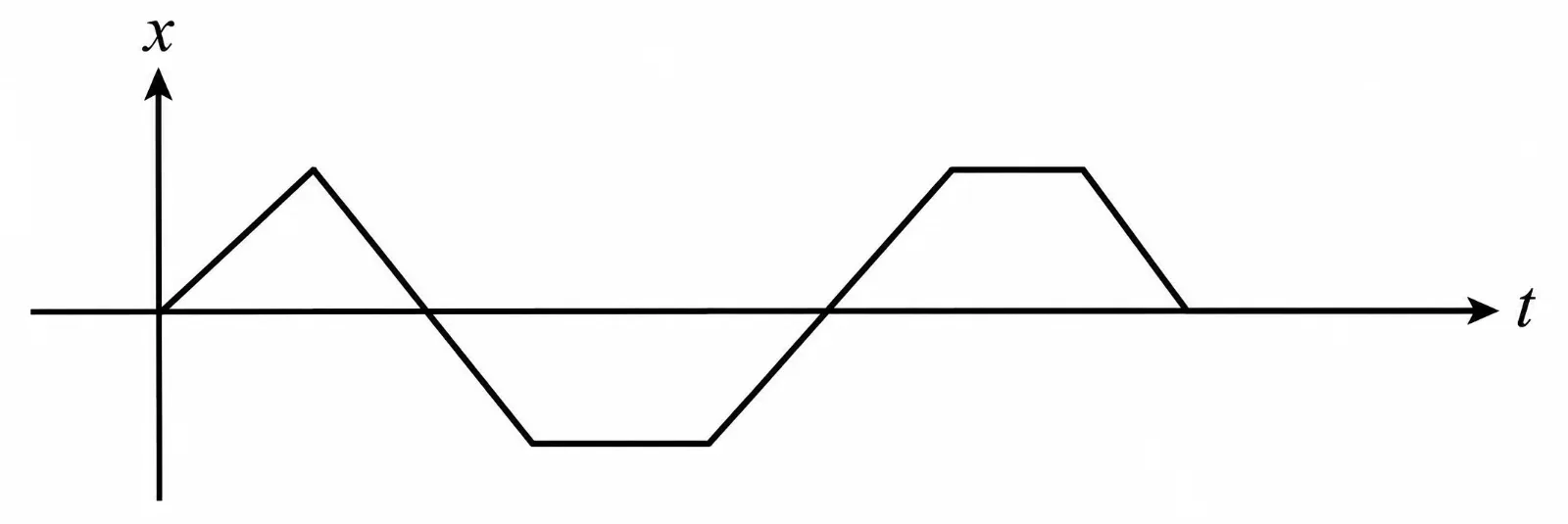
A particle moves on a straight line with varying velocity. Its position-time graph is shown. Find the number of times its velocity changes during the motion.
JEE MainsJEE Advanced
Open question & full solution → - MCQmediumKinematics Part-1 (one dimension)
For which graph must the average velocity of a particle moving along a straight line over the shown time interval be negative?
Options
JEE MainsNEET
Open question & full solution → - MCQmediumKinematics Part-1 (one dimension)
The position-time graphs of two students A and B returning from school to their homes are shown in the figure.
A. A lives closer to the school.
B. B lives closer to the school.
C. A takes less time to reach home.
D. A travels faster than B. E. B travels faster than A. Choose the correct answer.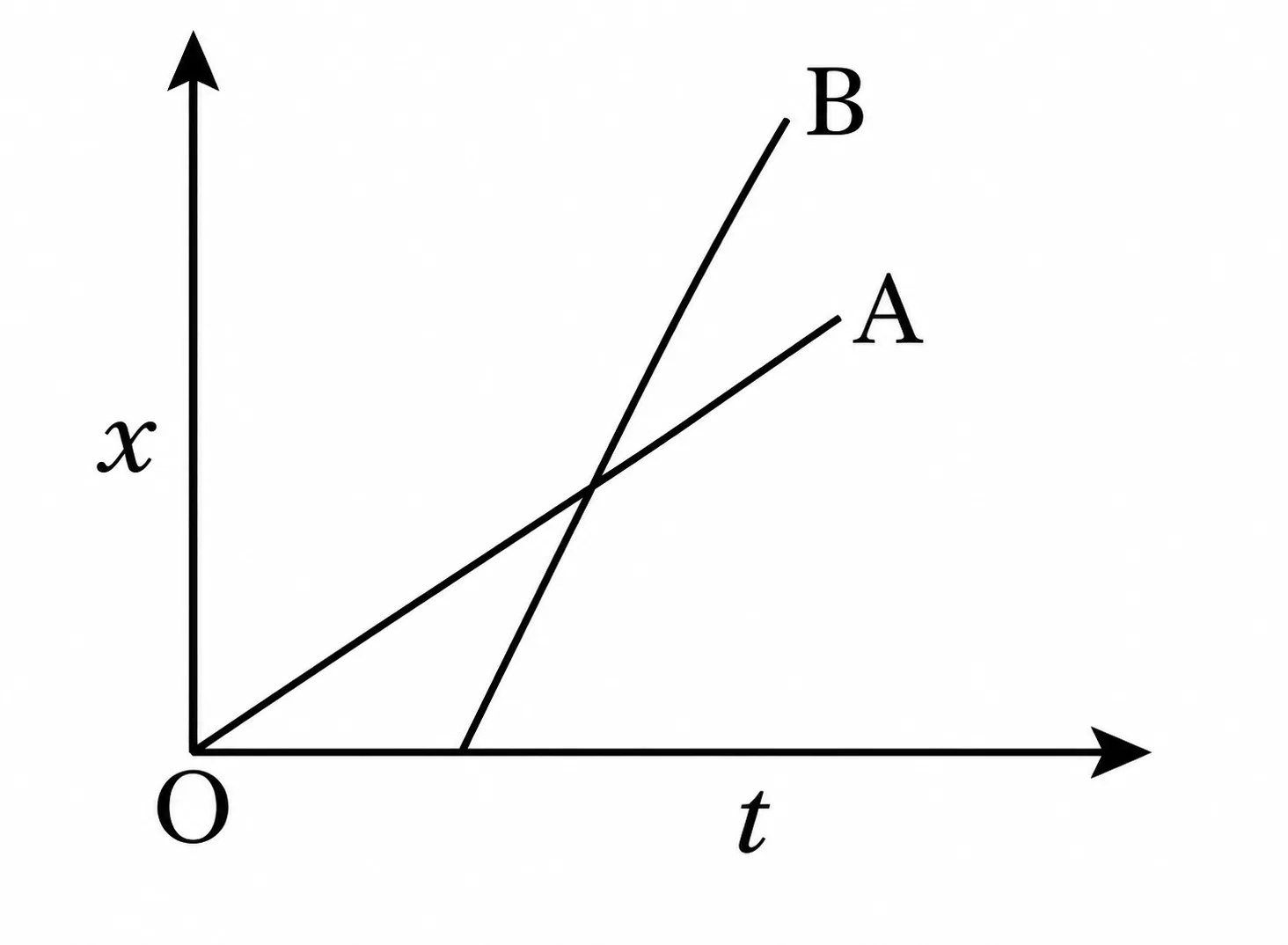
Options
JEE Mains10 April 2023Shift 1Morning Shift
Open question & full solution → - MCQmediumKinematics Part-1 (one dimension)
The displacement x versus time graph is shown below.
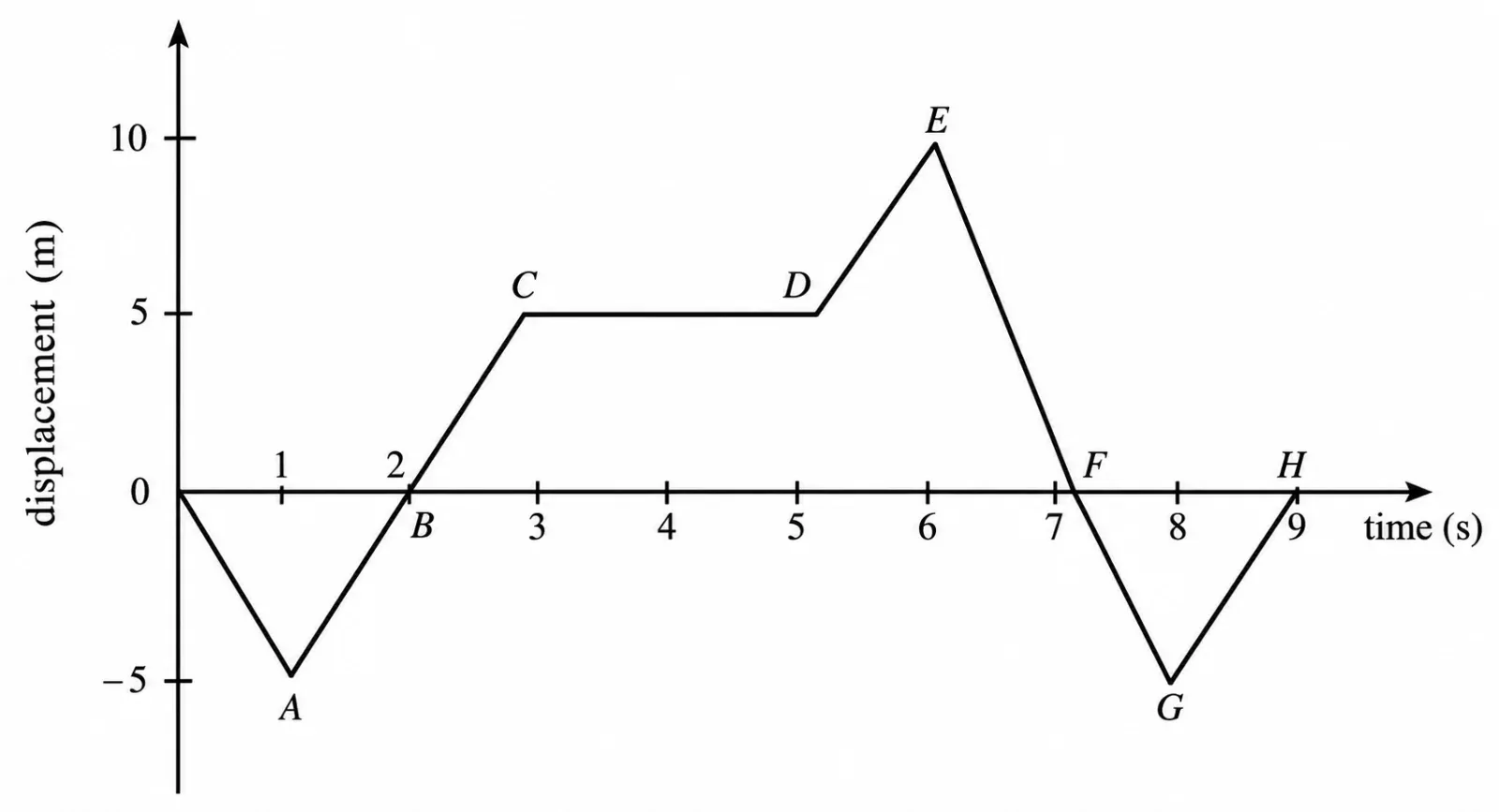
(A) The average velocity during 0 to 3 s is 10 m/s
(B) The average velocity during 3 to 5 s is 0 m/s
(C) The instantaneous velocity at t=2 s is 5 m/s
(D) The average velocity during 5 to 7 s and instantaneous velocity at t=6.5 s are equal
(E) The average velocity from t=0 to t=9 s is zero
Choose the correct answer from the options given below :
Options
JEE Main 2025 (Online) 4th April Evening Shiftkinematics previous year
Open question & full solution → - MCQmediumKinematics Part-1 (one dimension)
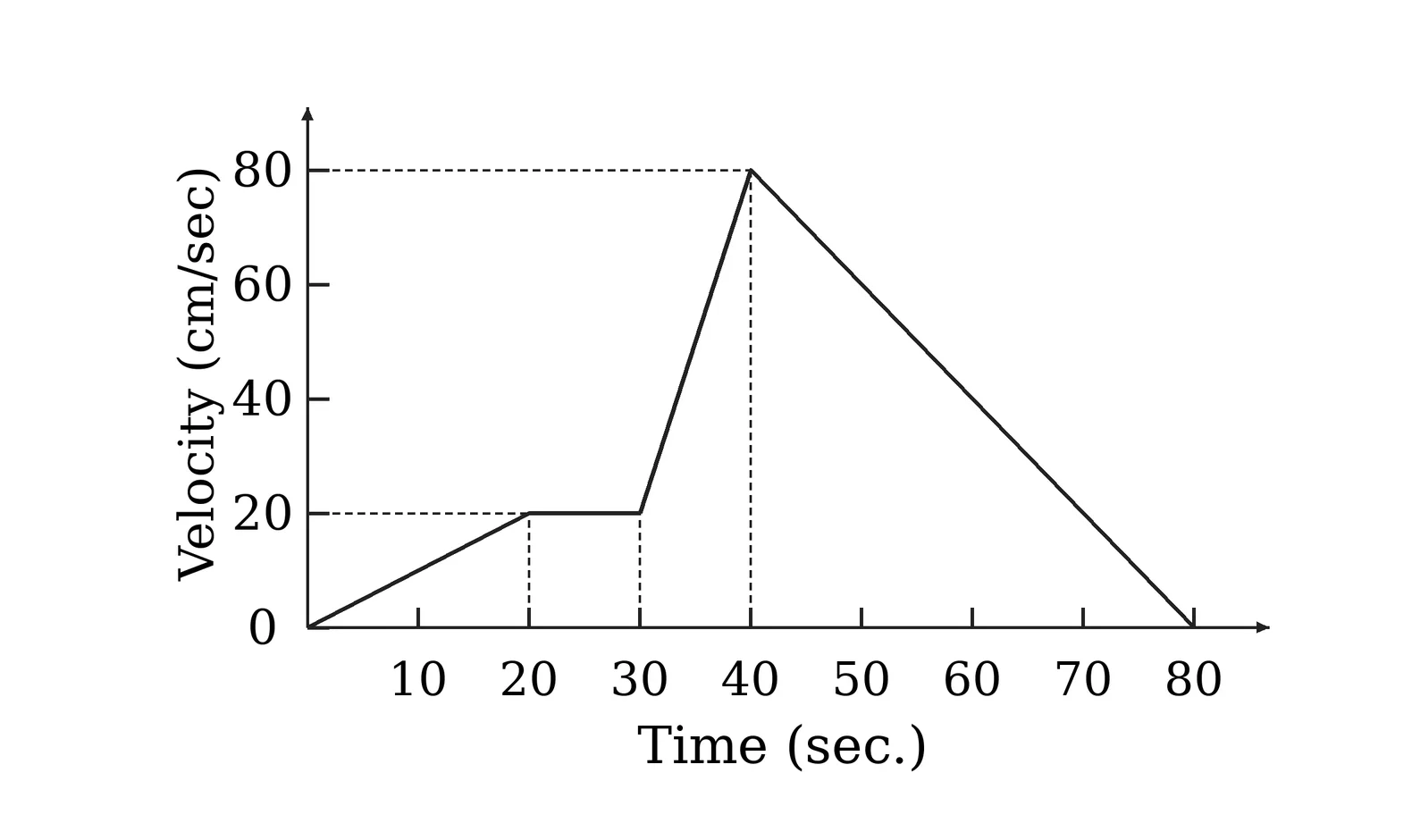
The velocity-time graph of a moving object is shown. The maximum acceleration is:
Options
JEE MainsNEET
Open question & full solution → - MatchdifficultKinematics Part-1 (one dimension)
Column-I shows position-time graphs of particles moving along a straight line. Match with Column-II.
List 1
p.
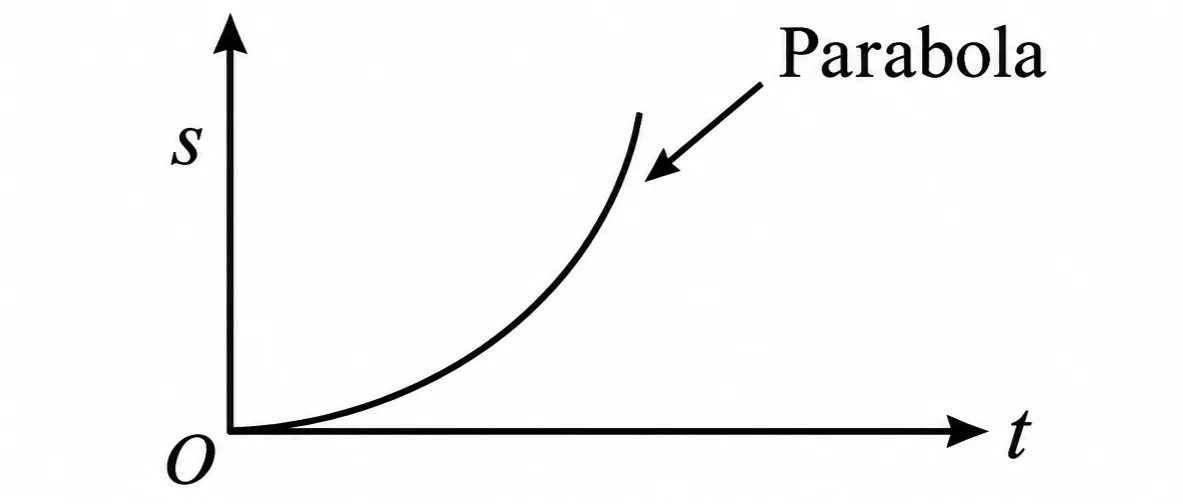
q.
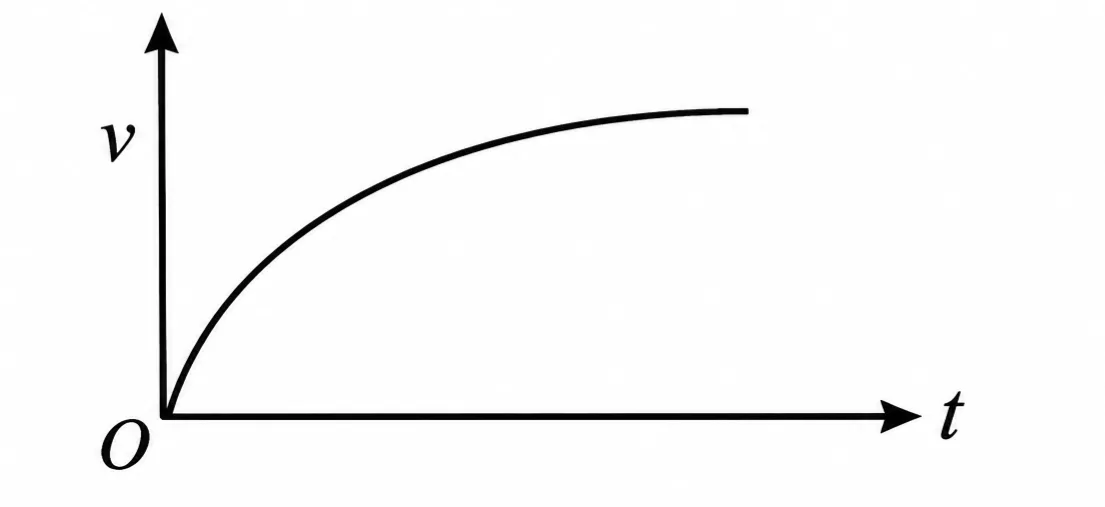
r.
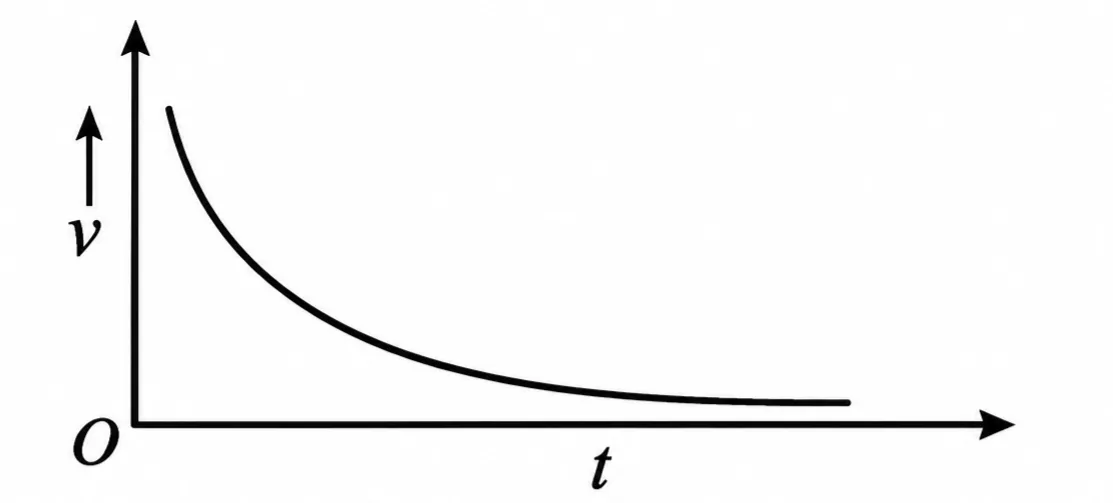
s.
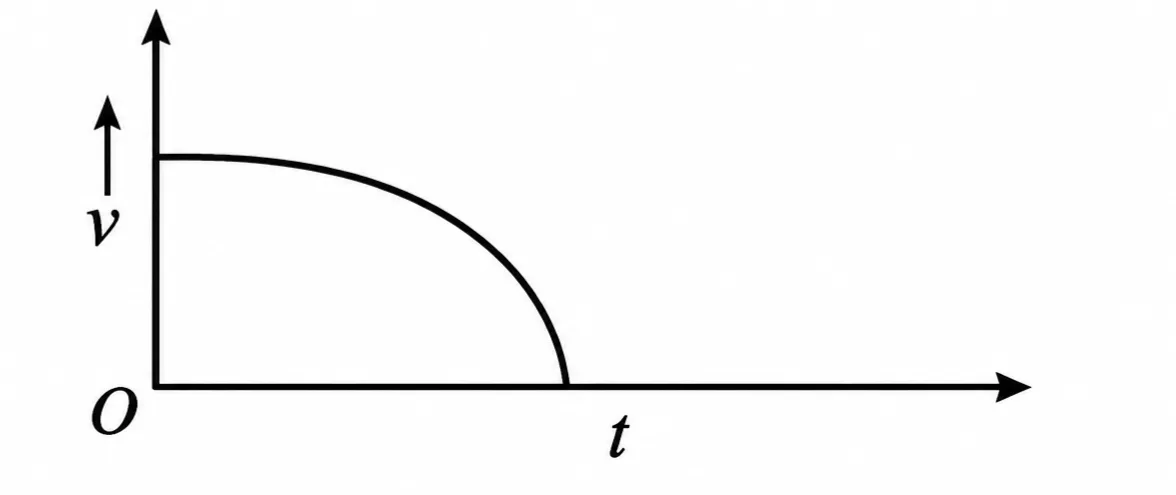
List 2
A. Acceleration a>0
B. Acceleration a<0
C. Speeding up
D. Slowing down
Options
JEE MainsJEE Advanced
Open question & full solution → - MCQeasyKinematics Part-1 (one dimension)
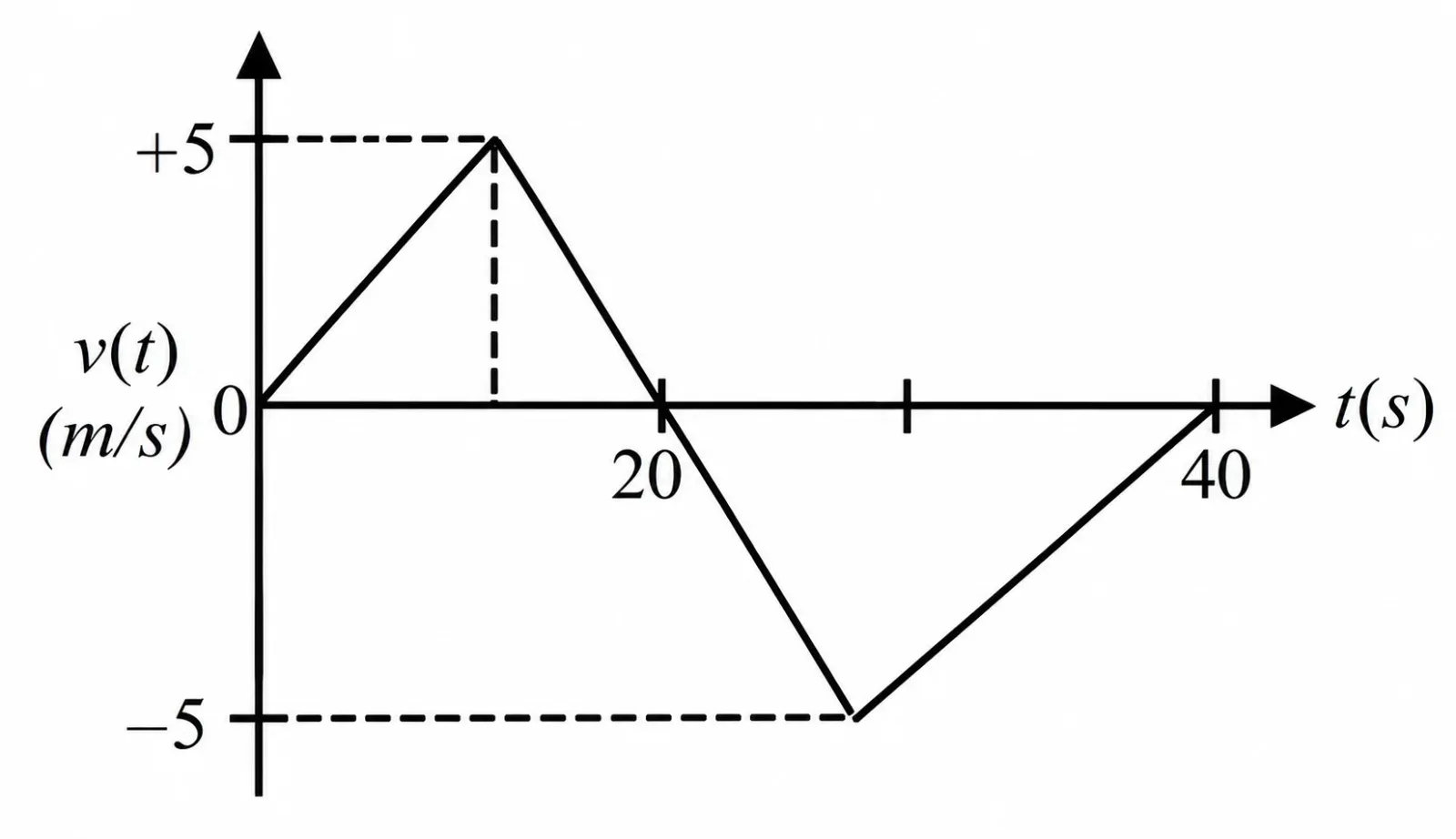
The velocity-time graph of a particle over a 40 s interval is shown in the figure. The graph consists of two triangular regions of equal base 20 s, one above and one below the time axis, each reaching a speed magnitude of 5 m·s⁻¹. What are, respectively, the total distance travelled by the particle and its average velocity over the 40 s interval?
Options
JEE Mains 2026 5 April Evening Shift
Open question & full solution →