Free question bank
Organic Chemistry - Some Basic Principles and Teachniques questions with solutions
Practice Organic Chemistry - Some Basic Principles and Teachniques questions for NEET and JEE Main. Attempt each question, then open the solution. Full revision programs are in the Physics courses.
Showing 1–10 of 1016 questions
- MCQeasyOrganic Chemistry - Some Basic Principles and TeachniquesOpen solution
The racemisation of optically active compounds is driven by :
Options
- MCQeasyOrganic Chemistry - Some Basic Principles and TeachniquesOpen solution
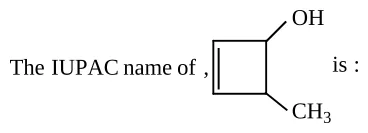
GOC_1_0676_Q.png
Options
- MCQeasyOrganic Chemistry - Some Basic Principles and TeachniquesOpen solution
Which of the following species is paramagnetic in nature?
Options
- MCQmediumOrganic Chemistry - Some Basic Principles and TeachniquesOpen solution
Williamson’s synthesis involves
Options
- MCQeasyOrganic Chemistry - Some Basic Principles and TeachniquesOpen solution
In which of the following species the central carbon atom is negatively charged?
Options
- MCQeasyOrganic Chemistry - Some Basic Principles and TeachniquesOpen solution
In cannizzaro reaction given below The slowest step is

GOC_1_0293_Q.png
Options
- MCQmediumOrganic Chemistry - Some Basic Principles and TeachniquesOpen solution
Detection of phosphorus in the compound can be done by its conversion into phosphate. Reagent to identify phosphate ion is
Options
- MCQeasyOrganic Chemistry - Some Basic Principles and TeachniquesOpen solution
The reagent used in dehalogenation process is :
Options
- MCQeasyOrganic Chemistry - Some Basic Principles and TeachniquesOpen solution
When two halogen atoms are attached to two adjacent carbon atoms, the dihaloalkane is called :
Options
- MCQeasyOrganic Chemistry - Some Basic Principles and TeachniquesOpen solution
S[N]1 mechanism for the reaction, R-X+KOH ⟶ROH+KX follow :
Options