Free question bank
Classification and Nomenclature: Functional groups, homologous series, structural formulas, and IUPAC naming. questions with solutions
Practice Organic Chemistry - Some Basic Principles and Teachniques questions for NEET and JEE Main. Attempt each question, then open the solution. Full revision programs are in the Physics courses.
Showing 1–10 of 414 questions
- MCQeasyOrganic Chemistry - Some Basic Principles and TeachniquesOpen solution
A molecule is R₃C—H. If H is replaced by Z(R₃C—Z) and on doing so electron density on R₃—C part increases, then Z is :
Options
- MCQmediumOrganic Chemistry - Some Basic Principles and TeachniquesOpen solution
In butane, which of the following forms has the lowest energy?
Options
- MCQeasyOrganic Chemistry - Some Basic Principles and TeachniquesOpen solution
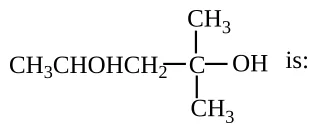
The IUPAC name for
GOC_1_0009_Q.png
Options
- MCQeasyOrganic Chemistry - Some Basic Principles and TeachniquesOpen solution
+I effect is shown by
Options
- MCQeasyOrganic Chemistry - Some Basic Principles and TeachniquesOpen solution
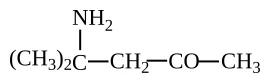
The given compound in IUPAC may be called,
GOC_1_0798_Q.png
Options
- MCQeasyOrganic Chemistry - Some Basic Principles and TeachniquesOpen solution
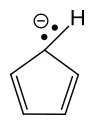
How many π-electrons are there in the following structure?
GOC_1_0671_Q.png
Options
- MCQeasyOrganic Chemistry - Some Basic Principles and TeachniquesOpen solution
During pyrolysis of an alkane, C—C bond breaks faster than the C—H bond because :
Options
- MCQeasyOrganic Chemistry - Some Basic Principles and TeachniquesOpen solution
Why is C₂ in 2-methylpent-3-ene not a stereogenic carbon?
Options
- MCQeasyOrganic Chemistry - Some Basic Principles and TeachniquesOpen solution
The structure remaining after one H is removed from hydrocarbon is :
Options
- MCQeasyOrganic Chemistry - Some Basic Principles and TeachniquesOpen solution
The bond energy for catenation next to carbon is :
Options