Free question bank
Friction in Multiple-Block Systems questions with solutions
Practice Newtons law of motion and Friction questions for NEET and JEE Main. Attempt each question, then open the solution. Full revision programs are in the Physics courses.
Showing 1–10 of 38 questions
- IntegermediumNewtons law of motion and FrictionOpen solution
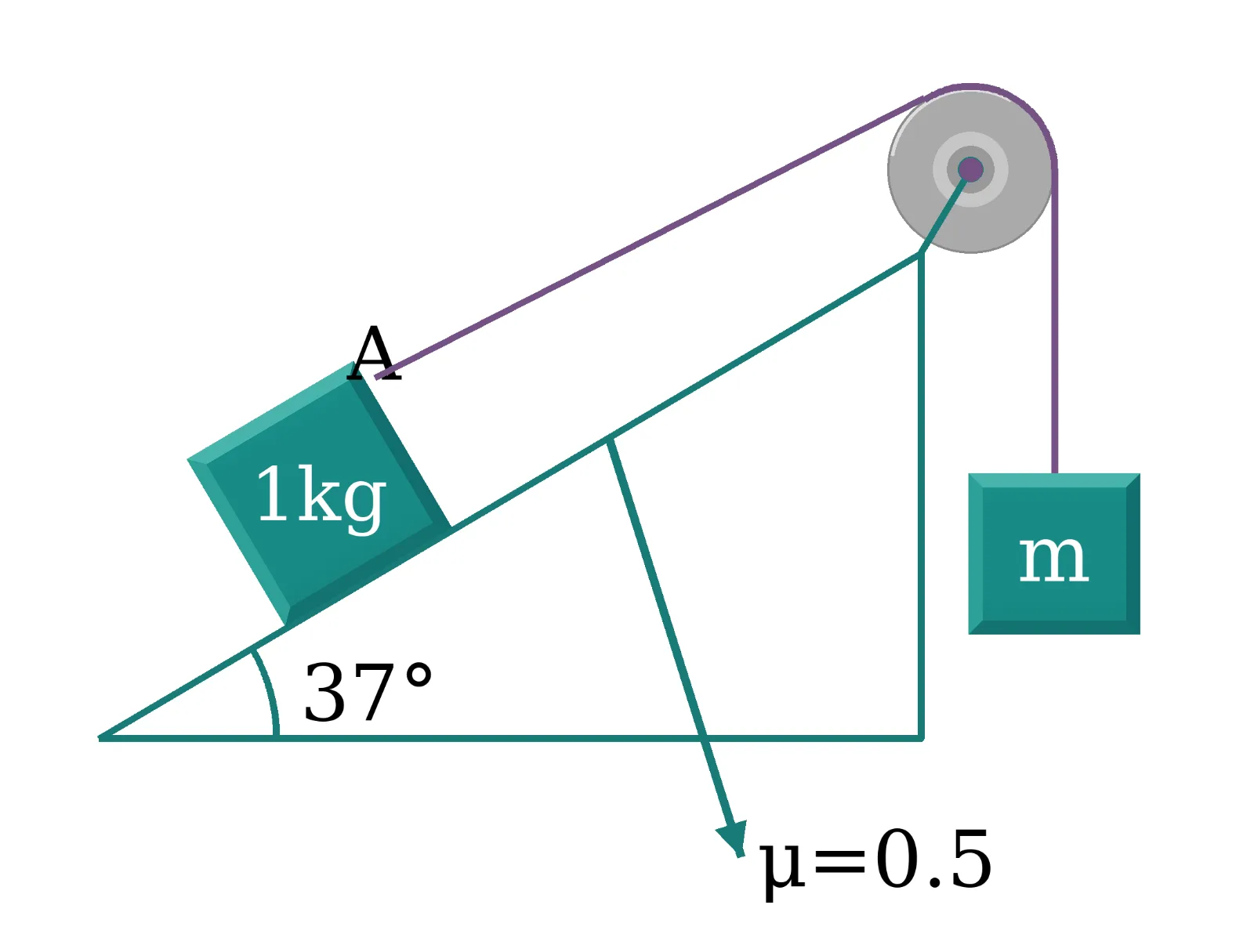
In the shown arrangement, what should be the hanging mass m so that block A of mass 1 kg slides up a 37° rough incline with constant velocity? The coefficient of friction is μ = 0.5. Take g = 10 m s⁻².
- MCQdifficultNewtons law of motion and FrictionOpen solution
A block of mass m rests on a plank of mass M. The plank lies on a smooth horizontal floor. Coefficient of static friction between block and plank is μ. A horizontal force F is applied to the plank. The maximum value of F for which the block does not slip is:
Options
- MCQdifficultNewtons law of motion and FrictionOpen solution
A block of mass m is placed on a block of mass 2m. The lower block rests on a smooth floor. Coefficient of static friction between blocks is μ. A horizontal force F is applied to the upper block. The friction required to make the blocks move together is 4μmg/3. Which statement is correct?
Options
- MCQmediumNewtons law of motion and FrictionOpen solution
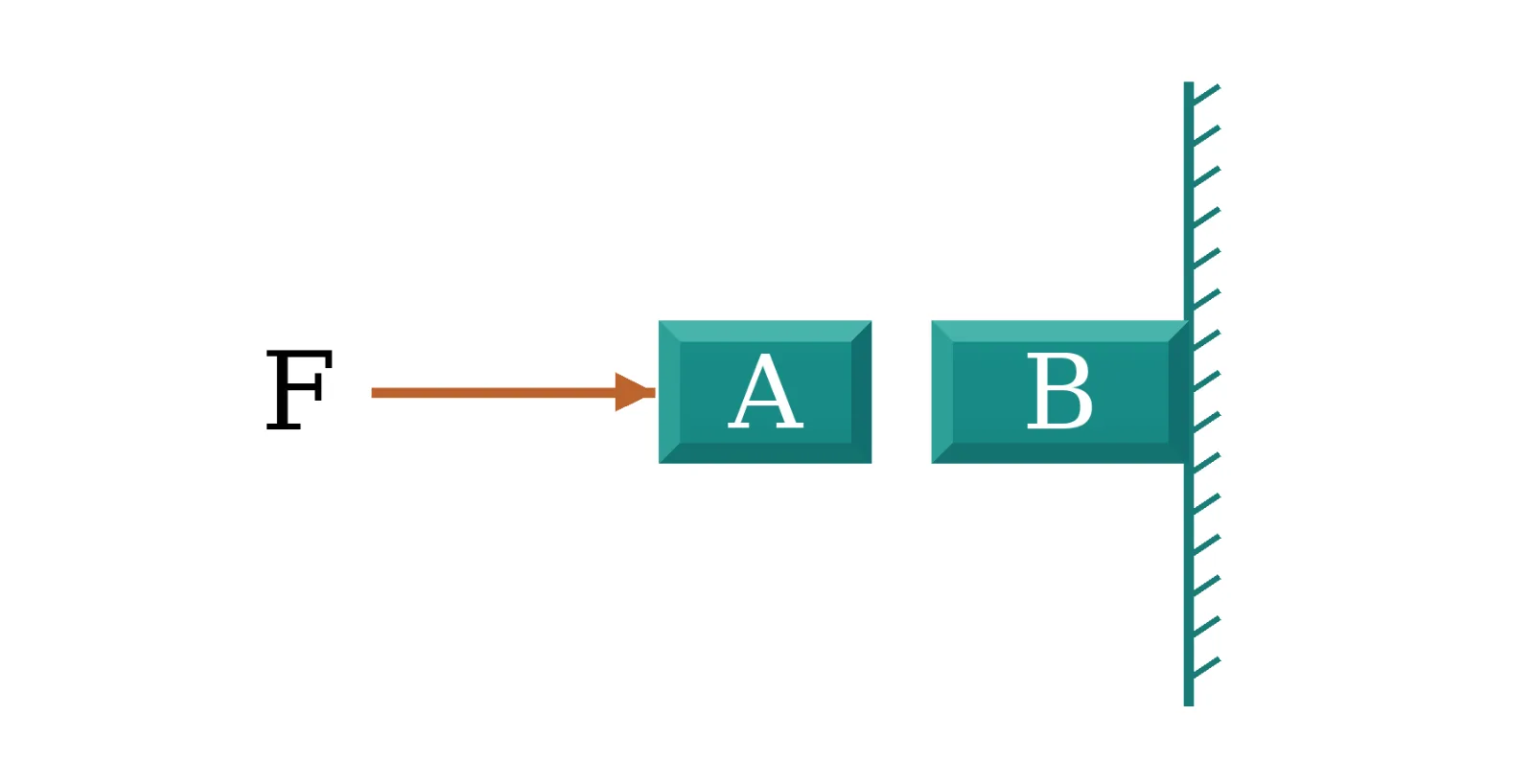
Blocks A and B weigh 20 N and 100 N and are pressed against a vertical wall as shown. The coefficient of friction between A and B is 0.1 and between B and the wall is 0.15. The frictional force applied by the wall on B is:
Options
- MCQdifficultNewtons law of motion and FrictionOpen solution
A 2 kg block A is placed on a 5 kg block B. The ground is smooth and coefficient of static friction between A and B is 0.4. A horizontal force F is applied on B. Take g = 10 m/s². The maximum value of F for which there is no slipping is:
Options
- MCQmediumNewtons law of motion and FrictionOpen solution
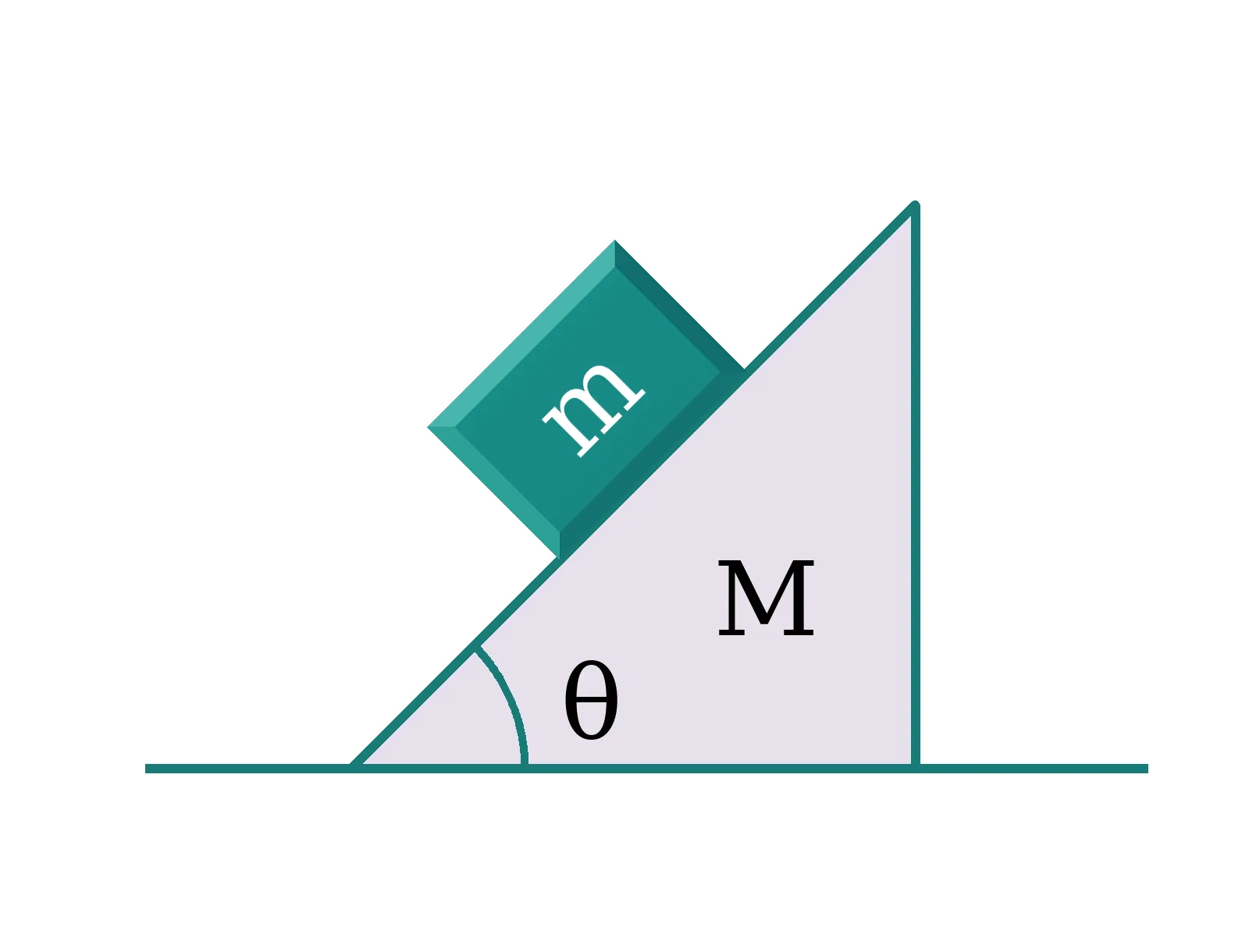
A block of mass m slides down a wedge of mass M. Find the minimum coefficient of friction required between the wedge and the ground so that the wedge does not move.
Options
- MCQmediumNewtons law of motion and FrictionOpen solution
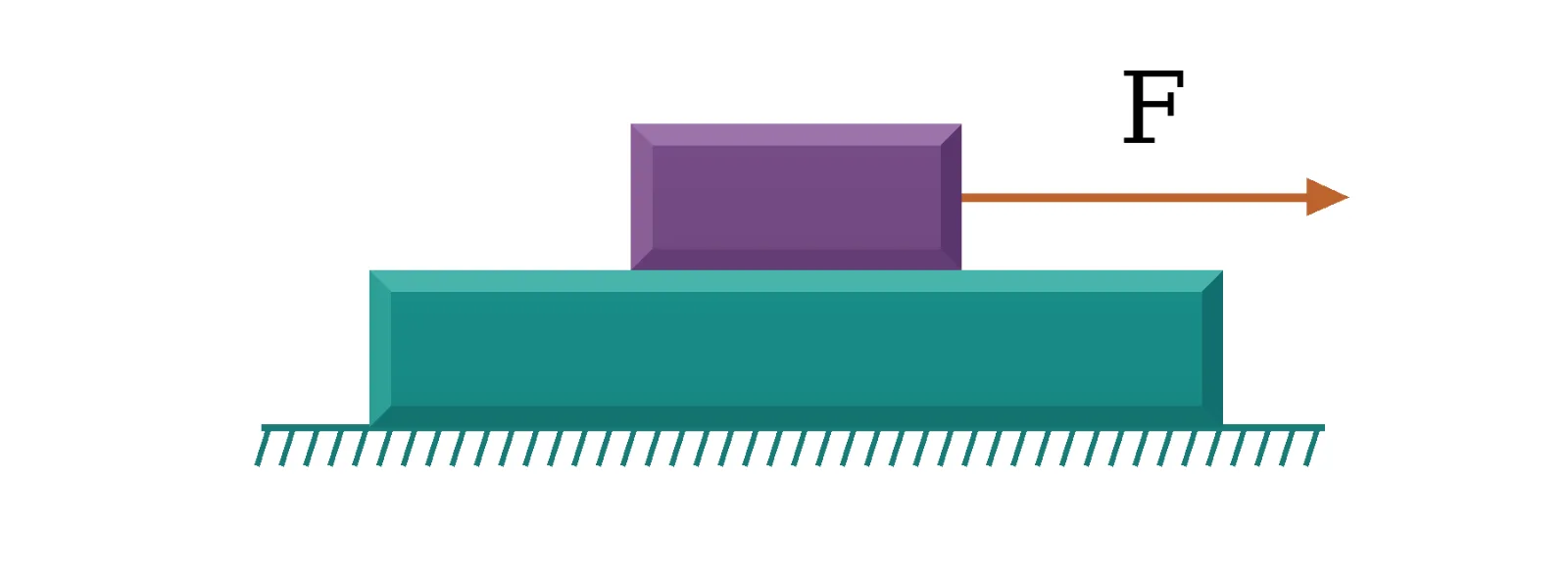
A 1 kg block lies on a 2 kg plank. The coefficient of friction between block and plank is 0.4, while that between plank and floor is 0.1. A horizontal force F = 10 N acts on the upper block. Find the acceleration of the plank.
Options
- MCQdifficultNewtons law of motion and FrictionOpen solution
A block of mass m is placed on a plank of mass M lying on a smooth horizontal floor. Coefficient of kinetic friction between them is μ. A sufficiently large horizontal force F is applied to the plank so that the plank slides towards the right relative to the block. The acceleration of the block relative to the plank is:
Options
- MCQmediumNewtons law of motion and FrictionOpen solution
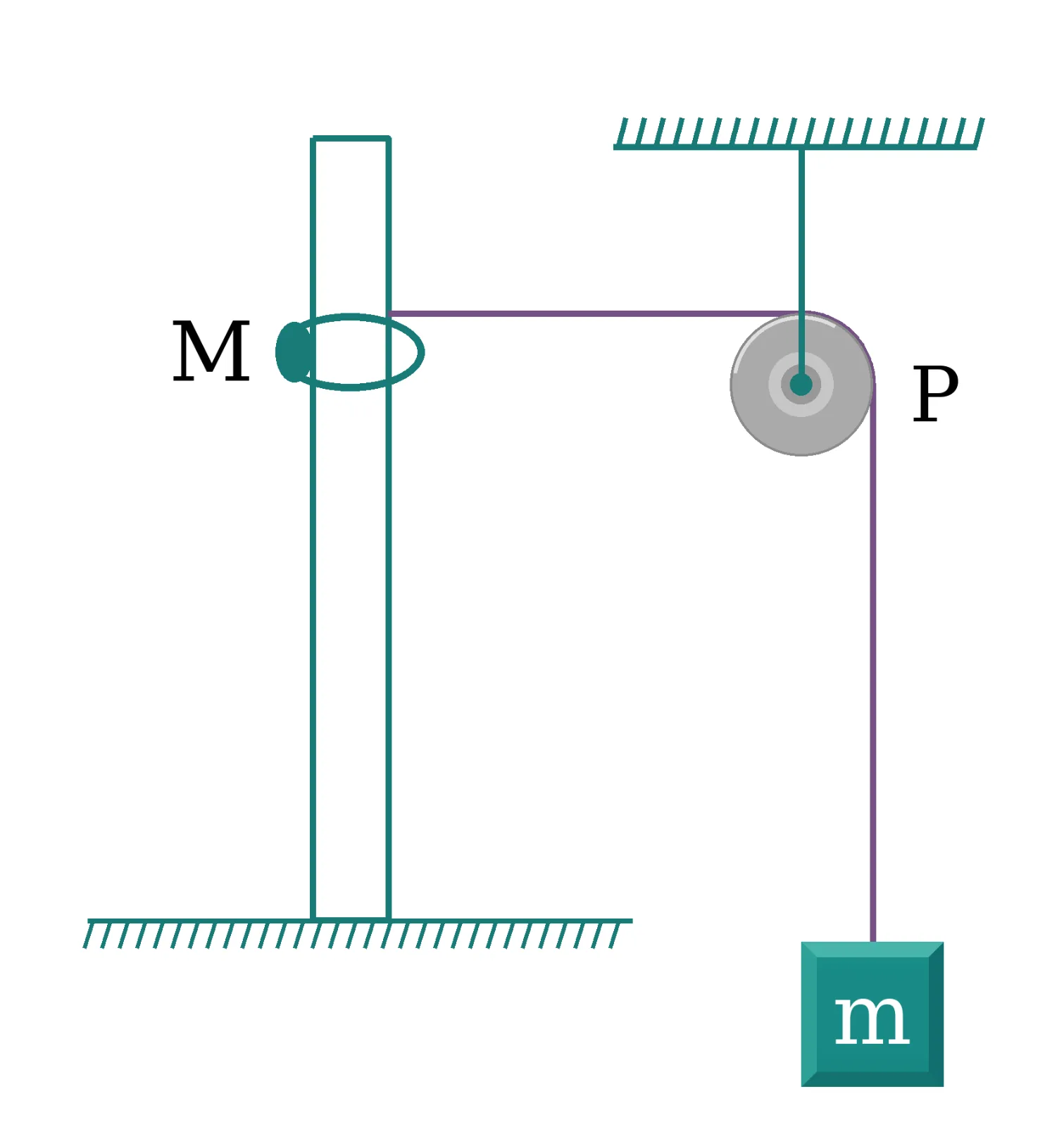
A ring of mass M and a block of mass m are in equilibrium. The string is light, the pulley is frictionless, and the coefficient of friction between the pole and the ring is μ. The frictional force exerted by the pole on the ring is:
Options
- IntegermediumNewtons law of motion and FrictionOpen solution
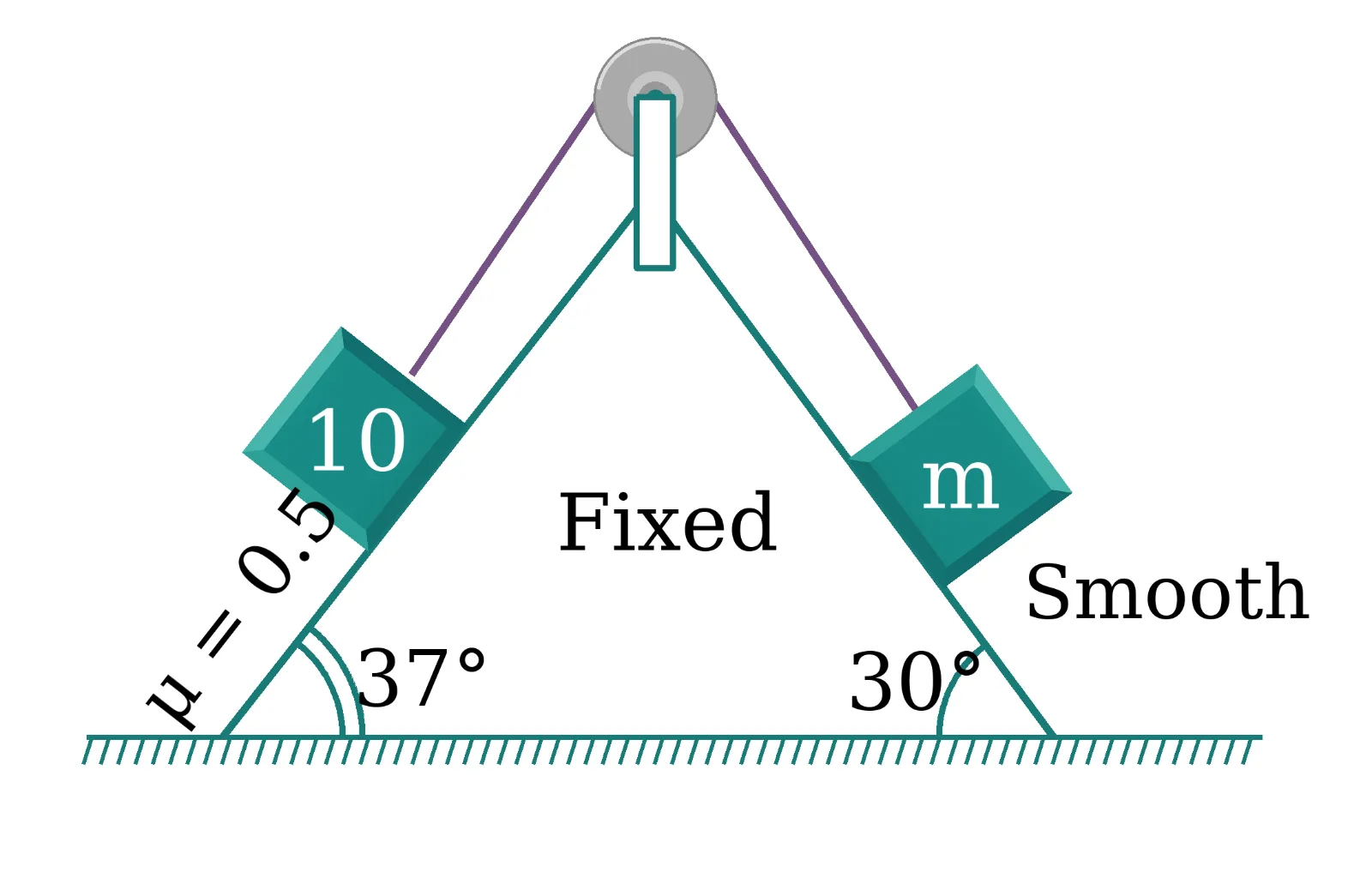
Find the minimum hanging mass m so that the 10 kg block moves up the 37° inclined plane in the shown arrangement.